
Food temperature logs are one of those operational tools that look simple on paper but have a big effect on day-to-day restaurant control. A clean log does more than collect numbers. It gives your team a repeatable way to track what is happening across any storage or holding area during service.
For many restaurants, temperature checks start out as an informal habit. A manager glances at a unit, someone says it looks fine, and the reading lives in someone's memory or in a note that is hard to find later. That might work for a quiet period, but it breaks down quickly when the team is busy, the shift changes, or a problem appears later in the day. A written temperature log turns that fragile memory-based process into a clear record.
One of the biggest benefits of logging temperatures daily is consistency. When the same format is used every day, staff know exactly what to record, where to record it, and who is responsible for the check. That reduces confusion and helps new team members learn the routine faster. It also makes handovers easier because the next shift does not have to guess whether a check was completed.
Temperature logs also make exceptions easier to spot. If the freezer reading is slightly higher than expected, or a hot-holding unit is drifting, the issue is much more visible when it is written down in a clean format. That visibility is important because small changes often become bigger problems if they are not noticed early. A clear log supports faster corrective action, whether that means adjusting equipment, moving product, reporting a fault, or escalating the issue to a manager.
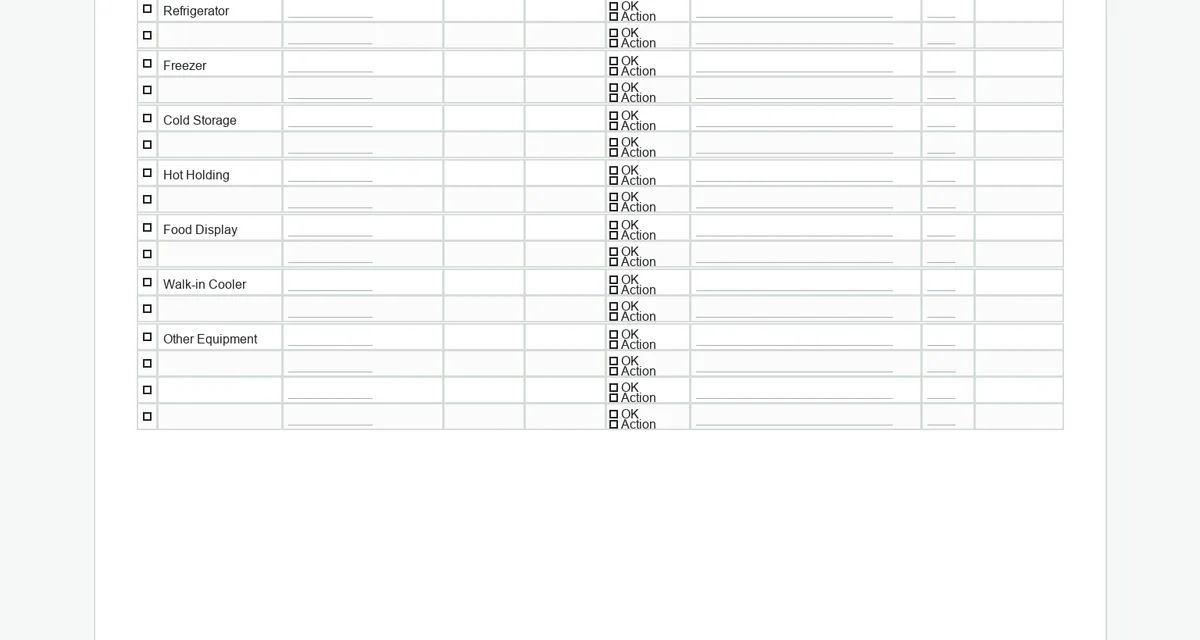
The right log can also improve accountability without adding complexity. Staff do not need a long explanation of how to use it. They only need a structured place to record the time, area, equipment, target temperature, actual reading, status, corrective action, and initials. Checkbox status fields are faster to complete during a busy shift, which matters because the best process is usually the one people will actually use.
Another reason temperature logs matter is that they create a useful history. When a restaurant keeps a steady record, patterns become easier to see. A unit that repeatedly sits near the edge of the expected range may need servicing. A display cabinet that needs attention every Friday afternoon may be under too much load. A freezer that only fails after delivery days may be getting opened too often. Those patterns are easy to miss when information is scattered, but they become clearer when every day is recorded in the same place.
Temperature logs are also helpful for training. New staff often learn best from simple systems they can repeat. A log gives them a concrete routine to follow instead of vague instructions about "checking everything." Over time, that kind of repeatable habit supports stronger operational discipline across the whole team.
There is also a customer-facing benefit, even if customers never see the log itself. Better temperature control helps protect product quality, reduce waste, and support a calmer, more reliable service environment. When equipment is checked consistently, there are fewer surprises, fewer rushed fixes, and fewer avoidable interruptions during the day.
For small businesses in particular, a simple system is usually the best system. You do not need a complicated digital workflow to improve temperature recording. You need a printable format that is easy to keep near the equipment, simple to fill in, and professional enough to use every day without friction. That is why paper-based logs still work so well in real operations.
If your team currently records temperatures in scattered notes, on scrap paper, or only when someone remembers, the first improvement is straightforward: use one standard log for every shift. Keep it visible, keep it simple, and keep the layout consistent so staff always know where the record belongs.
That is where a Restaurant Food Temperature Log can help. It gives restaurants a clean, minimal, printable template for recording temperatures in one place, supporting better handovers, clearer accountability, and a more consistent food safety routine. The revised version also makes the sheet easier to complete by hand by giving the team more usable rows, guided operational areas, blank equipment entries, status checkboxes, and a more practical review footer.